
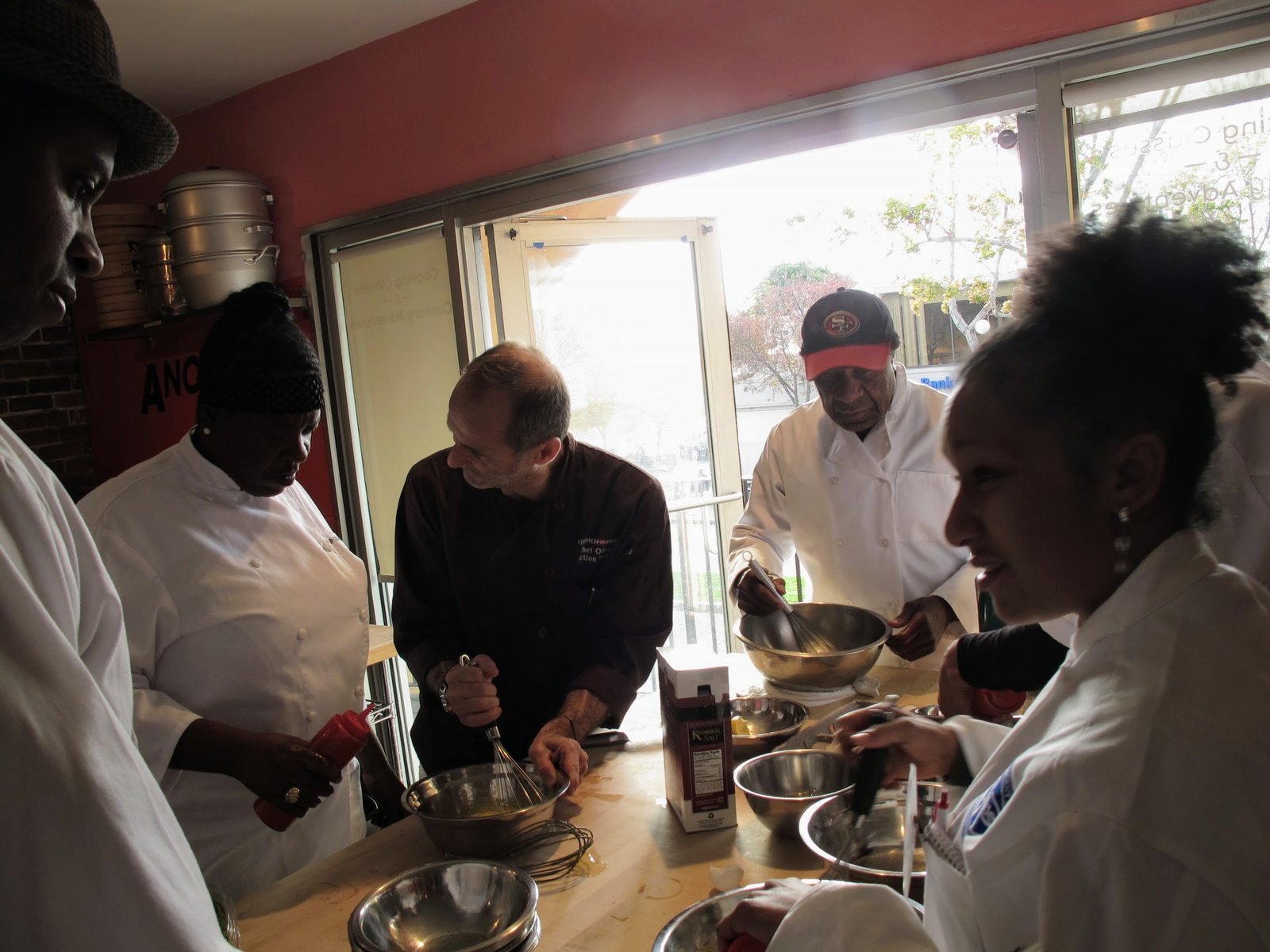
Two eggs and a mayo.
That was the whole lesson. For years I worked with The Bread Project and St. Vincent de Paul’s Kitchen of Champions, helping people get ready for their first kitchen job. Before every interview, I drilled them on the same two things: cook eggs properly, and make mayonnaise by hand, no machine.
Why those two? Because that’s what a hiring chef asks first.
Why a Hiring Chef Asks for Eggs and Mayonnaise
A chef doesn’t need you to know his menu on day one. He needs to know you can handle the basics. Eggs and mayonnaise show that fast.
My line was always the same. Show the chef you can do the minimum, and he will train you on his menu.
Eggs test heat control and timing. An egg is cheap, simple and honest. Too much heat and it turns rubbery. Too little attention and it overcooks while you look away. A chef can watch you cook one egg and learn a lot about how you work.
Mayonnaise by hand tests something else. It tests emulsification, which means getting oil and egg yolk to join into one smooth sauce. It tests your patience. And it tests your whisk technique. There is no machine to hide behind. Either you can feel the sauce coming together, or you can’t yet.
These are not fancy skills. That is the point. They are the foundation everything else stands on.
How to Cook Eggs Properly
You don’t need special tools. You need a good pan, a little butter and some attention.
Soft Scrambled Eggs
- Crack two or three eggs into a bowl. Add a pinch of Celtic salt or Redmond Real Salt and whisk until the yolks and whites are fully mixed.
- Melt a small piece of butter in a nonstick or well-seasoned pan over low heat. The butter should foam gently, not brown.
- Pour in the eggs. Stir slowly with a spatula, pushing the eggs from the edges to the center.
- Keep the heat low. Be patient. Soft curds will form.
- Take the pan off the heat while the eggs still look a little wet. They keep cooking on the plate.
Fried Eggs
- Heat a little butter in a pan over medium-low heat.
- Crack the egg into a small cup first, then slide it into the pan. This keeps the yolk whole.
- Cook until the white is set and the yolk is still soft. Cover the pan for a minute if the top of the white needs help.
- Season with a pinch of salt and pepper at the end.
The lesson in both: low heat, steady attention, and know when to stop.
How to Make Mayonnaise by Hand
Homemade mayonnaise takes a few minutes and a little arm work. It tastes better than anything from a jar.
What You Need
- 1 egg yolk, at room temperature
- A little Dijon mustard (optional, but it helps the sauce hold)
- 1 to 2 teaspoons lemon juice or vinegar
- About 3/4 cup oil, a blend of avocado oil and olive oil in roughly equal parts
- A pinch of Celtic salt or Redmond Real Salt
The Method
- Set your bowl on a damp towel so it doesn’t slide.
- Whisk the yolk with the mustard, a little of the acid and the salt.
- Start adding the oil drop by drop, whisking all the time. This is the most important part. Go slowly.
- Once the sauce thickens and looks glossy, you can pour the oil in a thin stream. Keep whisking.
- Taste. Add the rest of the acid and a little more salt if it needs it. A spoonful of water will loosen it if it gets too thick.
How to Fix a Broken Mayonnaise
If your mayo turns thin and greasy, it has broken. Don’t throw it out. Put a fresh yolk in a clean bowl. Then whisk the broken mayo into it, drop by drop, just like you did with the oil. It will come back together.
Breaking a mayo is part of learning. Every cook does it. Fixing it is where you really learn how an emulsion works.
Want to see it done? Watch our Homemade Garlic Mayo video on the Kitchen on Fire YouTube channel.
What My Students Taught Me
Years later I still run into them. They smile and say, “Chef, you’ll never guess. Two eggs and a mayo.”
Honestly, I think I got more out of it than they did.
Good cooking always starts with the basics. If you want to build that foundation in your own kitchen, take a look at our 12-Week Basics of Cooking Series.